
Practice
ON THIS PAGE
About
Shaping urban policy and practice through:
Key Focus Areas
Urban governance
We support legal, fiscal, and institutional reforms that make public institutions more effective, accountable, and aligned to India’s urban transition.
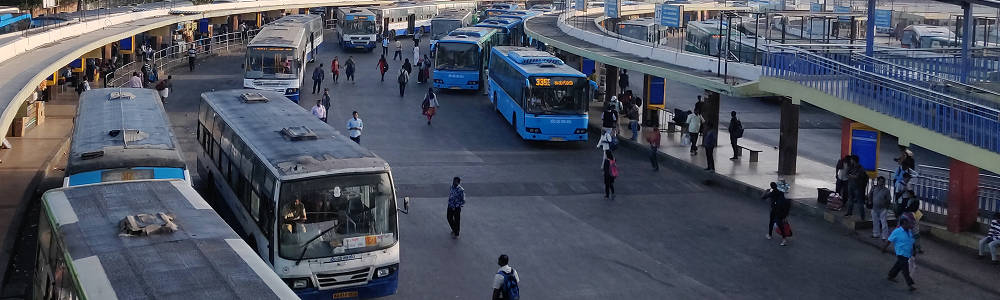
- Legal and institutional reform:
We work with Central, State, and city governments to strengthen municipal laws, clarify mandates, streamline administrative systems, and improve intergovernmental coordination so that institutions can plan, decide, and deliver more effectively. - Governance instruments and incentives:
We design regulatory frameworks, performance incentives, and other governance tools that enhance accountability, improve decision-making, and drive responsive urban management. - Integrated governance initiatives:
We design and implement large-scale programmes that knit together planning, finance, service delivery, and oversight into cohesive, future-ready governance systems.
Aligned with: IIHS School of Governance
Shaping India’s governance architecture
We have partnered with the Ministry of Housing & Urban Affairs (MoHUA) and the Ministry of Rural Development (MoRD), Government of India on reforming governance, municipal finance, performance management systems, land and water management systems, advised Central and State Finance Commissions on fiscal and development strategies, and led institutional and legal reform efforts across multiple States.
Urban and regional economic development
We aim to strengthen the links between urbanisation, spatial form, and economic growth, with a clear focus on inclusive and sustainable outcomes.
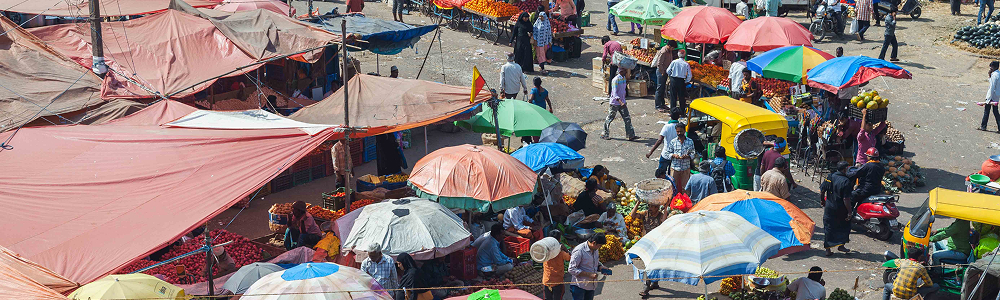
- Strategic and policy support:
We help Central and State governments harness urbanisation for economic development by framing strategies and policy options that translate urban growth into jobs, productivity, and regional prosperity. - Integrated spatial and economic planning:
We work with government agencies to align spatial and economic planning across cities and regions, using diagnostics and scenarios to guide investments and support balanced, sustainable growth. - Legal and programmatic, and policy advisory:
We provide legal, programmatic, and policy advice on urban transitions, infrastructure, and regional investment so institutions can prioritise inclusive growth and direct capital to high-impact, resilient projects.
Aligned with: IIHS School of economic development
Enabling multi-scale economic strategies
We have advised the XV Finance Commission on urbanisation-led national economic recovery, collaborated with NITI Aayog on positioning cities as growth engines, and partnered with the XVI Finance Commission, the Ministry of Housing & Urban Affairs (MoHUA), Government of India and the Government of Rajasthan on designing policy frameworks for urban transitions. At the metropolitan level, we have brought a strong economic lens to the Third Master Plan for Chennai, and supported integrated land, transport, and economic planning in Bengaluru.
Urban and infrastructure finance
We work on informing and shaping public and private investment to drive equitable, sustainable growth, stronger municipal finances, and resilient infrastructure.
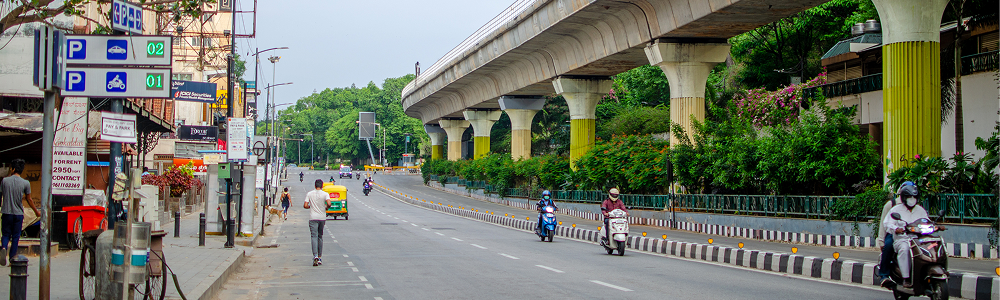
- Strategic support to governments :
We help Central and State governments strategise urban, municipal, and infrastructure financing so that resource mobilisation is better aligned with development priorities and service delivery. - Financing assessments for reform and investment :
We analyse urban, public, climate, and resilient infrastructure financing to identify reform options and guide high-impact investment decisions. - Unlocking emerging financing mechanisms:
We design policy and advisory solutions that enable cities and States to tap new and innovative financing instruments across the urban and sustainable development spectrum.
Aligned with: IIHS School of Governance
Shaping investment priorities
We supported the State-wide development, infrastructure, and new capital investment structuring for the new State of Andhra Pradesh in 2014 and advised India’s XV and XVI Finance Commissions on post-pandemic economic recovery pathways, supporting India’s urban transition, and designing disaster risk-aligned intergovernmental transfers. Our recent work across 90 cities from 24 States and UTs provides actionable insights to strengthen investment planning and improve spend quality.
Material systems
We aim to strengthen India’s capacity to manage minerals and materials in ways that support growth, equity, and climate resilience.
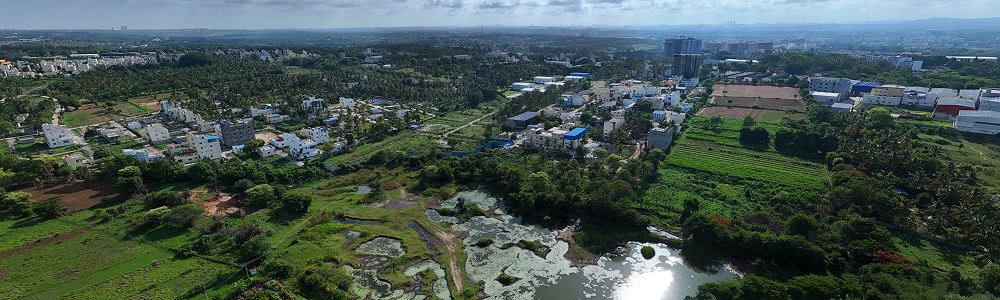
- Materials governance and policy:
We undertake applied research and advisory on materials and minerals governance, helping governments and regulators frame policies, standards, and regulatory pathways that align resource use with long-term development and climate goals. - Material flows, supply chains, and circularity:
We map material flows and value chains, and work with public and private actors to identify risks, design more resilient supply chains, and promote circular economy approaches and technology adoption. - Ecosystem mobilisation:
We convene government, industry, academia, and civil society to build shared understanding, co-produce solutions, and strengthen practitioner capacities for managing India’s materials transition.
Aligned with: IIHS School of Governance
Dravya: IIHS Centre for Materials and Sustainable Development
Dravya is IIHS’ dedicated national centre that anchors the institution’s material systems work, leading cutting-edge applied research and fostering dialogue on the strategic role of minerals and materials in building a resilient, low-carbon, and inclusive future for India.
Land and Real Estate
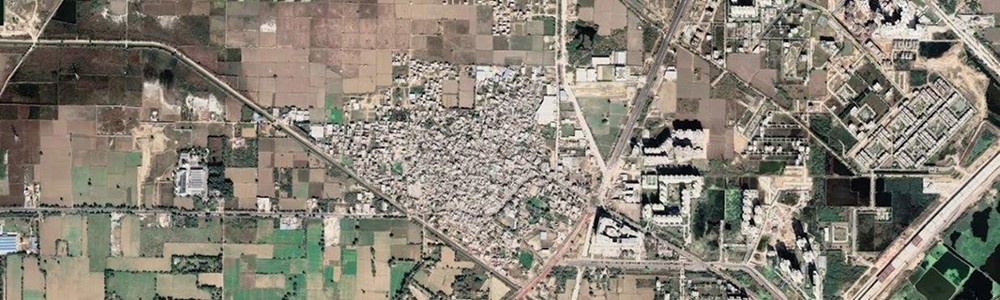
We work to unlock the constraints that current land governance arrangements place on urban planning, property markets, affordable housing, infrastructure development, and public finances.
- Legal and policy analysis:
We undertake legal, regulatory, and political economy analyses of land acquisition, development, regulation and transfer processes to frame clear reform pathways for more transparent, predictable, and equitable land governance. - Land administration advisory:
We strengthen land record systems, deploy modern survey technologies, and streamline registration and mutation services to reduce disputes, speed up transactions, and improve service delivery and revenue performance. - Knowledge partnerships:
Collaborates with cities and states to support land development and management, to enable real estate and infrastructure development, affordable housing and public finances.
Aligned with: IIHS School of Governance
Land governance: Across a third of India
We have worked across the rural, peri-urban and urban continuum in 15 States and a dozen million-plus cities, including Bengaluru, Chennai, Delhi and Mumbai and have served as knowledge partners to the Government of India’s Department of Land Resources (DoLR), Ministry of Housing & Urban Affairs (MoHUA), and the All India Forum for Real Estate Regulators (AIFORERA).
Housing
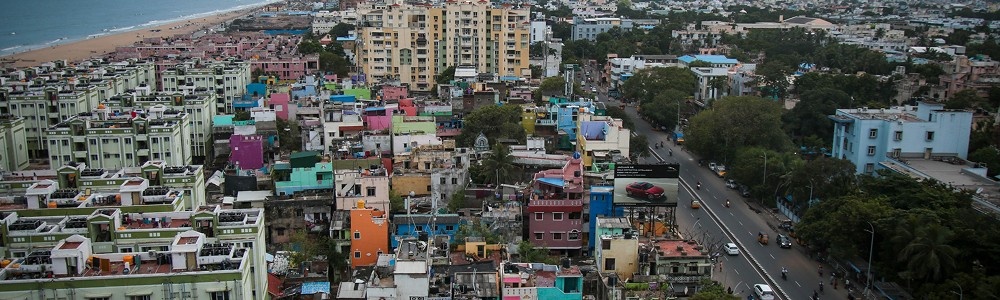
We aim to integrate planning, social sciences, and building science to strengthen India’s affordable housing ecosystem.
- Policy and programme design :
We craft policy and design programmes and strategies, addressing exclusions and vulnerability, legal and regulatory complexity, institutional roles, and market development possibilities. - Monitoring and evaluation:
We assess public housing programmes, including post-occupancy evaluations, to generate insights that inform policy and sharpen implementation. - Policy integration:
Supports integrating affordable housing with city-wide planning, transportation systems, and financing practices and instruments. - Building design and retrofit:
We work with government and industry partners to promote sustainable building technologies and practices in new construction and retrofit.
Aligned with: IIHS School of Systems & Infrastructure and IIHS School of Human Development.
Shifting housing policy
We have drafted Karnataka’s affordable housing and slum development policies; supported Odisha’s Jaga Mission with its slum upgradation strategy; and proposed housing strategies for transit corridors. Our contributions to national discussions on rental housing and PMAY 2.0 have placed housing justice at the centre of policy reform.
Sustainable buildings
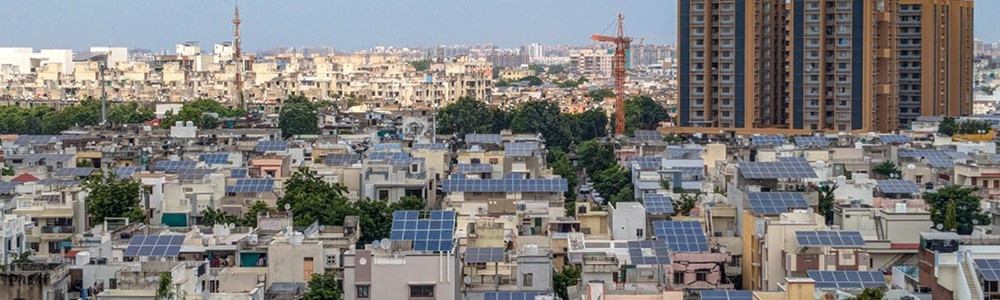
We work on driving the transition to sustainable buildings by leveraging advanced technologies, institutional strategies, and multi-stakeholder collaborations to deliver impact at scale.
- Policy analysis:
We generate insights on institutional strategies and financing instruments that can strengthen the sustainable buildings ecosystem and enable innovative, super-efficient design and construction. - Multi-stakeholder collaborations:
We convene academia, students, industry partners from real estate and manufacturing, incubators, regulators, and practitioners to spur innovation, open pathways for policy change, shape industry practice, and build a future-ready workforce. - Technology development ,testing and performance assessments:
We work on sustainable building design, energy and thermal audits, life cycle assessments, and intelligent operating systems to ensure thermal comfort, optimise energy use, and reduce operational costs, using the 54-acre IIHS, Kengeri Campus in Bengaluru as a testbed for these innovations.
Aligned with: IIHS School of Systems & Infrastructure
Enabling sustainable buildings at scale
We lead ASSURE, the world’s largest initiative for high-performance buildings (HPBs), delivering technical assistance to developers, building skills among youth and practitioners, and driving innovation, policy, and financing ecosystems. We co-manage SDI, the world’s largest net-zero building challenge, where student teams partner with industry on live projects, shaping future talent and transforming building practice.
Water and Sanitation
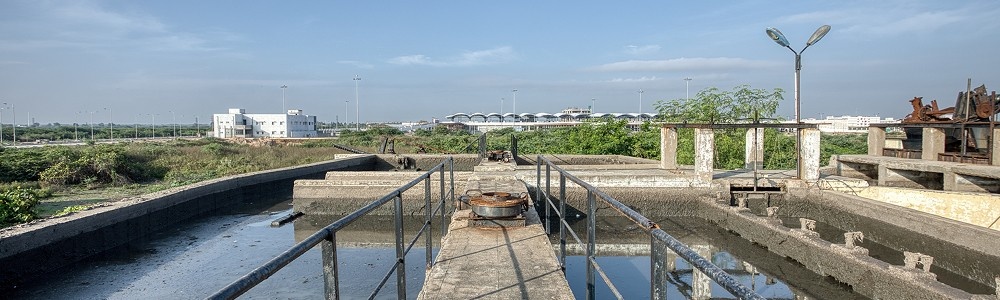
We help shape national and global policy, institutional approaches, and implementation models to deliver inclusive, sustainable water and sanitation services across urban and rural areas.
- State and city-level strategies :
We develop State- and city-level strategies and action plans that chart technical, institutional, and social pathways to inclusive and sustainable water and sanitation outcomes. - Technical and programme management support:
We provide technical and programme management support to design, implement, and demonstrate service delivery models that are environmentally sound, financially viable, and institutionally feasible at scale. - Community-level initiatives:
We design and implement community-level initiatives that ensure high-quality, affordable services for the urban poor, and promote safety, dignity, voice, and better livelihood options for sanitation workers. - Global policy and governance:
Our global policy work is redefining how water governance and the economics of water are understood and applied, influencing institutional stances and regulatory approaches worldwide.
Aligned with: IIHS School of Systems & Infrastructure, IIHS School of Environment & Sustainability, IIHS School of Human Development.
TNUSSP: Impact at scale
We anchor one of the world’s largest SDG 6-focused urban interventions, the Tamil Nadu Urban Sanitation Support Programme (TNUSSP) ,TNUSSP has enabled the scaling-up and operationalisation of faecal sludge management (FSM) solutions across 650 cities and towns of Tamil Nadu, touching 20 million people.
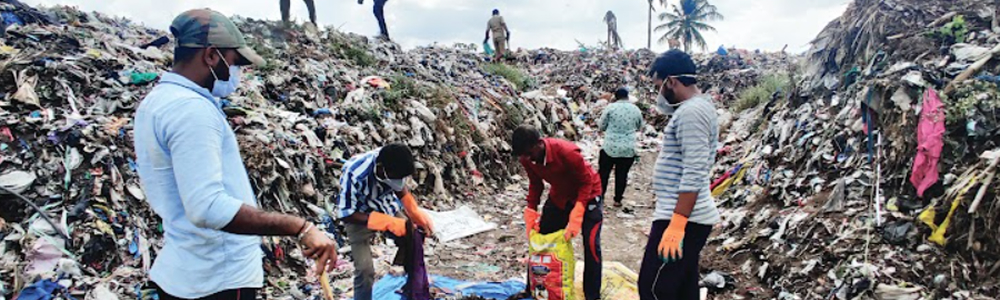
Solid Waste Management
We support cities and communities in building safe, efficient, and sustainable waste management systems.
- City-level strategies and action plans:
We develop comprehensive city-level strategies and action plans that drive better waste management outcomes and enable the transition to a circular waste economy. - Technical and programme management support:
We design and manage implementation of waste systems that demonstrate environmentally sound, financially viable, and institutionally feasible solutions at scale. - Community-level initiatives:
We design and implement initiatives that empower communities and waste workers, ensuring high-quality, affordable services for the urban poor. - Multi-stakeholder collaborations:
We facilitate carefully designed collaborations among governments, industry, and civil society to influence policy, catalyse innovation, and shape more responsible and effective urban waste management practices.
Aligned with: IIHS School of Systems & Infrastructure
Building bottom-up impact
Our work on SWM in Karnataka has helped more than 20 cities improve waste processing and management. In Chikkaballapura, Doddaballapura and Chitradurga, we are implementing an innovative city–farmer partnership for wet waste processing that is raising the bar on circularity and promising to serve as a model for smaller urban centres across the country.
Energy
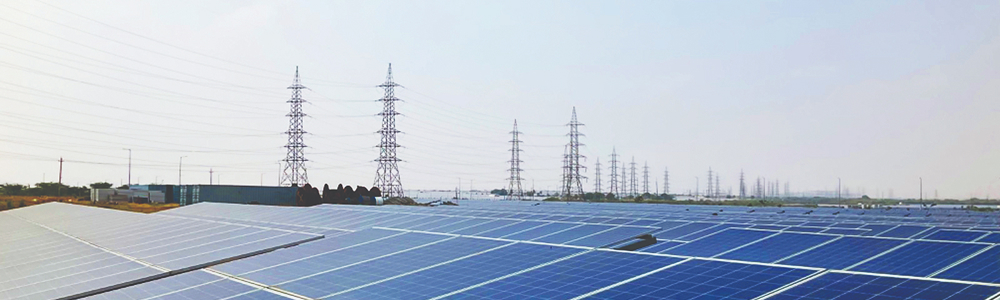
We help accelerate a clean and just energy transition by identifying practice–policy opportunities, addressing capacity gaps, and aligning energy and climate policy, technology, and behaviour change.
- Energy transition assessments:
We assess energy transitions at global, national, regional, city, and household levels, integrating economic, social, and governance perspectives to understand barriers, opportunities, and distributional impacts. - Policy and financing options:
We design policy frameworks and financing strategies for large-scale transition pathways, with a particular focus on the urban–climate–energy nexus and directing investment towards equitable, low-carbon futures. - Community-level initiatives:
We design and support community-level initiatives that expand universal energy access and promote just transitions, especially for low-income and vulnerable households.
Aligned with: IIHS School of Systems & Infrastructure
Just energy transitions
Our cross-country work on Reconfiguring Energy for Social Equity (ReSET) reimagines urban energy transitions that deliver economically and socially just outcomes, highlighting the critical role of policy frameworks and financial innovation in achieving them.
Transport and Mobility
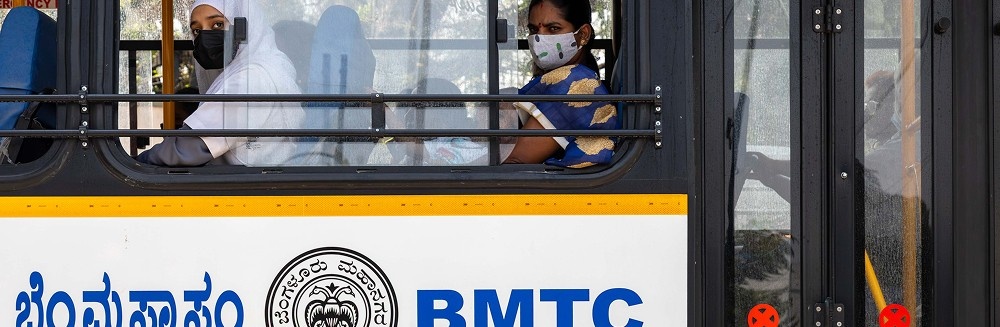
We work on advancing integrated transport and transit-oriented development (TOD) to reshape urban form, improve access and livability, and unlock economic, social, and spatial value.
- Place-based and system assessments :
We conduct spatial, institutional, and socio-economic place-based assessments to inform evidence-based urban mobility planning and the integration of transport, land use, and housing. - TOD and multi-modal integration (MMI):
We provide technical assistance on TOD and multi-modal integration (MMI), spanning urban planning, governance, financing, housing integration, and land value capture to enable compact, accessible, and climate-resilient growth.
Aligned with: IIHS School of Systems & Infrastructure, IIHS School of Economic Development, IIHS School of Human Development
Support for India’s largest metro projects
We have supported two of the country’s largest mass transit investments. Our work in Bengaluru involved designing the TOD plan for the Blue Line Metro corridor, integrating land use, transport, and housing for compact, accessible growth. Our affordable housing advisory for the Delhi–Haryana Regional Rapid Transit System (RRTS) helped align major transit investments with broader goals of inclusion and equitable urban development.
Food Systems and Ecosystem Services
We work at the intersection of food systems, ecosystem services, and biodiversity conservation to strengthen urban food security, sustainability, and resilience.

- Policy advice and ecosystem management:
We provide advisory support to governments on managing natural and managed ecosystems across diverse landscapes, from wilderness areas and peri-urban fringes to dense metropolitan regions, helping align land use, food systems, and conservation priorities. - Ecological Monitoring and nature-based solutions:
We undertake ecological monitoring and evaluation of key systems and nature-based solutions, generating evidence that informs long-term management plans, regulatory frameworks, and investment decisions for sustainable ecosystem services. - Community-level initiatives:
We design and implement community-level initiatives that strengthen local stewardship of land and aquatic ecosystems, including support for practices such as urban and peri-urban farming, watershed management, and restoration of commons. - Multi-stakeholder collaboration:
We facilitate carefully designed multi-stakeholder collaborations that bring together communities, governments, civil society, and researchers to promote urban agriculture, protect biodiversity, and embed ecosystem considerations into urban development.
Aligned with: IIHS School of Environment & Sustainability , School of economic development.
World’s first megacity Long-Term Urban Ecological Observatory
At our 54-acre IIHS Campus in Bengaluru, we host the world’s first Long-Term Urban Ecological Observatory in a megacity. This Living Lab integrates crop diversity, nature-based solutions, and active water and biodiversity conservation, enabling continuous learning, experimentation, and real-world impact.
Climate and Sustainability
We help shape global and domestic responses to climate change by charting policy, financing, and implementation pathways across global, national, regional, and local contexts.

- Assessing climate challenges:
We undertake comprehensive assessments of climate risks and actions from global to city scales, drawing on cutting-edge climate, sustainability, and urban science to inform decisions. - High-feasibility, context-specific strategies:
We develop high-feasibility, location- and context-specific strategies that balance planning and social policy, grey and physical infrastructure, and nature-based solutions to drive system transitions and climate-resilient development in both urban and rural areas. - Policy, financing and implementation options:
We identify and design policy, financing, and implementation options that align climate action with economic and human development goals, support resilient infrastructure and ecosystem services, and improve the management of physical and transition risks.
Aligned with: IIHS School of Environment & Sustainability
Local to global climate policy impact
IIHS has one of the largest concentrations of IPCC authors in a South Asian institution, contributing to major IPCC reports, such as AR5 Climate Change 2014: Impacts, Adaptation, and Vulnerability and Climate change 2023: Synthesis report of the IPCC sixth assessment report (AR6), as well as Paris Climate Agreement negotiations and key derivative outputs like the Summary for Urban Policymakers (SUP) of the IPCC Assessment Report 6 and the report on scaling up climate finance in the context of COVID-19. In India, regional and city-level assessments and implementation strategies cover 15 cities across 8 States.
Urban Risk and Resilience
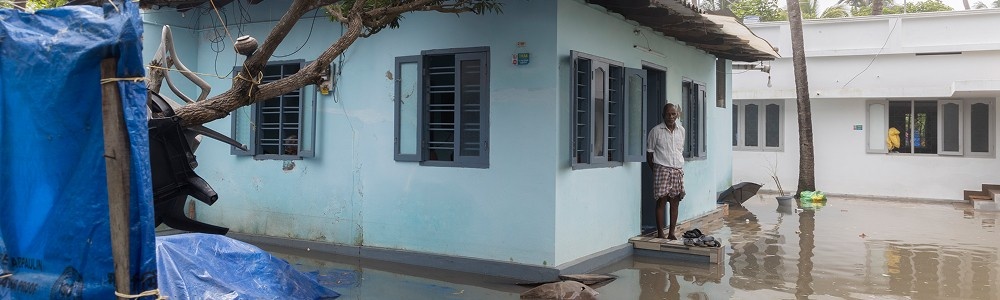
We help support the planning and development of resilient infrastructure, institutions, and livelihoods, from regional to global scales, with a strong focus on understanding and addressing disaster and climate risks.
- Risk and preparedness assessments:
We conduct disaster risk, preparedness, and post-disaster assessments across global, national, and city scales, recognising risk as a function of vulnerability, hazard exposure, and capacity and infrastructure deficits, and using this to guide resilience-building for institutions and communities. - Risk reduction strategies and resilient systems:
We develop risk reduction strategies at multiple scales that strengthen institutional and community capacities, and promote resilient infrastructure, buildings, and livelihoods. - Disaster financing and institutional frameworks :
We strengthen disaster financing and implementation frameworks across government levels, and design and appraise institutions and programmes that serve as flagship initiatives for disaster risk reduction and resilience. - Community strengthening and local leadership:
We design and implement community-level initiatives that build local leadership, improve engagement with disaster preparedness and response systems, strengthen community voice, and support informed choices on resilient infrastructure and building technologies.
Aligned with: IIHS School of Environment & Sustainability, IIHS School of Human Development
Assessing and addressing systemic risk across global and local scales
Globally, our work has informed the Global Assessment Reports (GAR) on Disaster Risk Reduction since 2009 and the Global Infrastructure Resilience: Capturing the Resilience Dividend (part of IIHS’ engagement with the Coalition for Disaster Resilient Infrastructure (CDRI)).
In India, the Programme’s work spans a dozen states and cities and includes risk assessments, preparedness and response systems, post-disaster recovery, and strategies for building institutional and community capacities.
Social Protection and Decent Work
Our work focuses on improving the quality of employment and reimagining social protection regimes for urban residents and informal workers.

- Policy development and programme design:
Our work on policy and programme design engages with enterprises and workers to improve the quality of employment for sustenance and growth, drawing on experiences from key sectors of informal work and urban social protection, including employment guarantees. - Implementation strategy and systems support:
We work with governments to develop and support implementation strategies for large-scale delivery of social protection, food security, health benefits, and urban employment and employment guarantee programmes. - Urban planning for informal work:
We design and support place-based interventions for diverse forms of informal work in the city, integrating transit planning, infrastructure, and housing into urban systems so that spatial planning better supports decent work.
Aligned with: IIHS School of Human Development, IIHS School of Economic Development.
India experience: Embedding decent work into urban spatial planning
We have partnered with State governments in Odisha and Rajasthan to design policy frameworks that support informal work and workers. Our deep understanding of the spatiality of different sectors of informal work has integrated decent work into spatial planning frameworks of several cities, including Chennai, Delhi and Mumbai.
Partners
EVENTS
IIHS Urban Policy Dialogues
Explore Assets
People
Projects
Publications
Programme Office
For any inquiries or further information, please reach out to practice@iihs.co.in